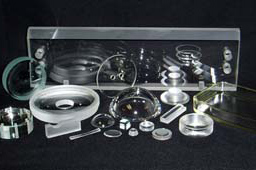
Here at S & S Optical Company we pride ourselves on having a long standing reputation as leaders in our industry. This reputation has been in place since our founding in 1950, and over the years, while our business has evolved into a company that provides precision optical solutions through fabrication of custom glass & quartz parts, we remain at the top of the class when it comes to high quality customer service and expertise.
Our optical glass selection is a prime example of this. As with all of our products, we will become involved at the early stages of your idea or need in order to help design a final product that will go above and beyond your expectations. Optical glass itself is special glass that is utilized in devices such as scanners, sensors, cathode ray tubes, etc. The actual application of the finished product matters greatly when it comes to selecting glass or quartz with the appropriate properties.
Considerations of Precision Optical Glass
When purchasing optical glass there are a few things to consider: the overall purpose(s) of the part, the temperature of the operating environment, the frequency of use, as well as chemical resistance and/or mechanical strength requirements. The reason that we take the time to understand the application of the finished product is so that we can select a material type that will meet or exceed that application’s requirements.
Optical Performance Requirements for High Accuracy Systems
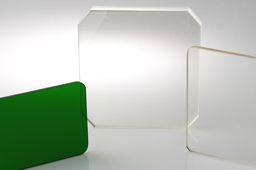
Optical glass components must deliver consistent transmission, uniform refractive properties, and stable surface quality to support imaging, sensing, and measurement applications. Variations in clarity, homogeneity, or refractive index can introduce distortion or signal loss, especially in systems that rely on tight alignment tolerances. When designing custom elements such as windows, covers, or sensor plates, understanding the optical path and environmental exposure helps determine the appropriate material grade and finishing approach. This ensures that the final component supports accurate performance across the full operating range of the device.
Thermal and Mechanical Behavior in Demanding Environments
Optical glass often operates in environments where temperature shifts, vibration, or mechanical loading can affect stability. Materials with predictable thermal expansion help maintain alignment in assemblies that experience heating from electronics, illumination sources, or outdoor conditions. Mechanical strength also matters for components that serve as protective barriers or structural elements within optical housings. Selecting a glass type that balances optical quality with mechanical resilience helps ensure long-term reliability in both static and dynamic applications.
Surface Preparation and Finishing for Precision Integration
The performance of an optical component depends heavily on surface quality. Processes such as grinding, polishing, edging, and beveling must be executed with consistency to achieve the required flatness, parallelism, and surface smoothness. These characteristics influence how the component interacts with light, how it seats within a mechanical assembly, and how it withstands handling during installation. Custom finishing also supports integration with coatings, adhesives, or mechanical fasteners used in advanced optical systems.
Manufacturing Flexibility for Custom Optical Designs
Custom optical components often require specialized geometries, tight tolerances, or unique surface features. A manufacturing partner with adaptable tooling, precision equipment, and experience in custom fabrication can support complex requirements without compromising quality. This flexibility is valuable for prototypes, low volume specialty parts, and high volume production runs where consistency and repeatability are priorities.
FAQ
How Does Optical Glass Maintain Performance in High Precision Systems?
Its uniform refractive properties, clarity, and stable surface quality support accurate imaging, sensing, and measurement functions.
Why Is Thermal Behavior Important for Optical Components?
Predictable expansion helps maintain alignment and prevents distortion in assemblies exposed to temperature changes.
What Role Does Surface Finishing Play in Optical Glass Performance?
Surface quality influences transmission, seating accuracy, and integration with coatings or mechanical assemblies.
How Is Material Type Chosen for Optical Applications?
Selection depends on wavelength requirements, environmental exposure, mechanical demands, and the intended function of the component.
Selecting Material
Selecting the proper material is just the first step of the process, as we then transition into the actual fabrication of your customized optical elements. The great thing about working with S & S Optical Company is that we take great deal of pride in performing detailed custom work – so much so that we will adapt, purchase or even build the machinery and/or tooling needed to ensure a final product that is manufactured to your exact preferences and specifications—all while remaining flexible to your production deadlines and just-in-time requirements.
Contact us today at (260) 749-9614 for more information about our optical glass services, custom glass machining, industrial glass fabrication or fill out our request for quote form today to see if we can provide you a custom solution for your unique need.